
Skilled to Build: How Charlotte’s $25 Billion Mobility Plan Could Create a Trades Boom |
Charlotte’s $25B mobility plan could create major opportunities for local trades, contractors and small businesses through the Skilled to Build initiative. |
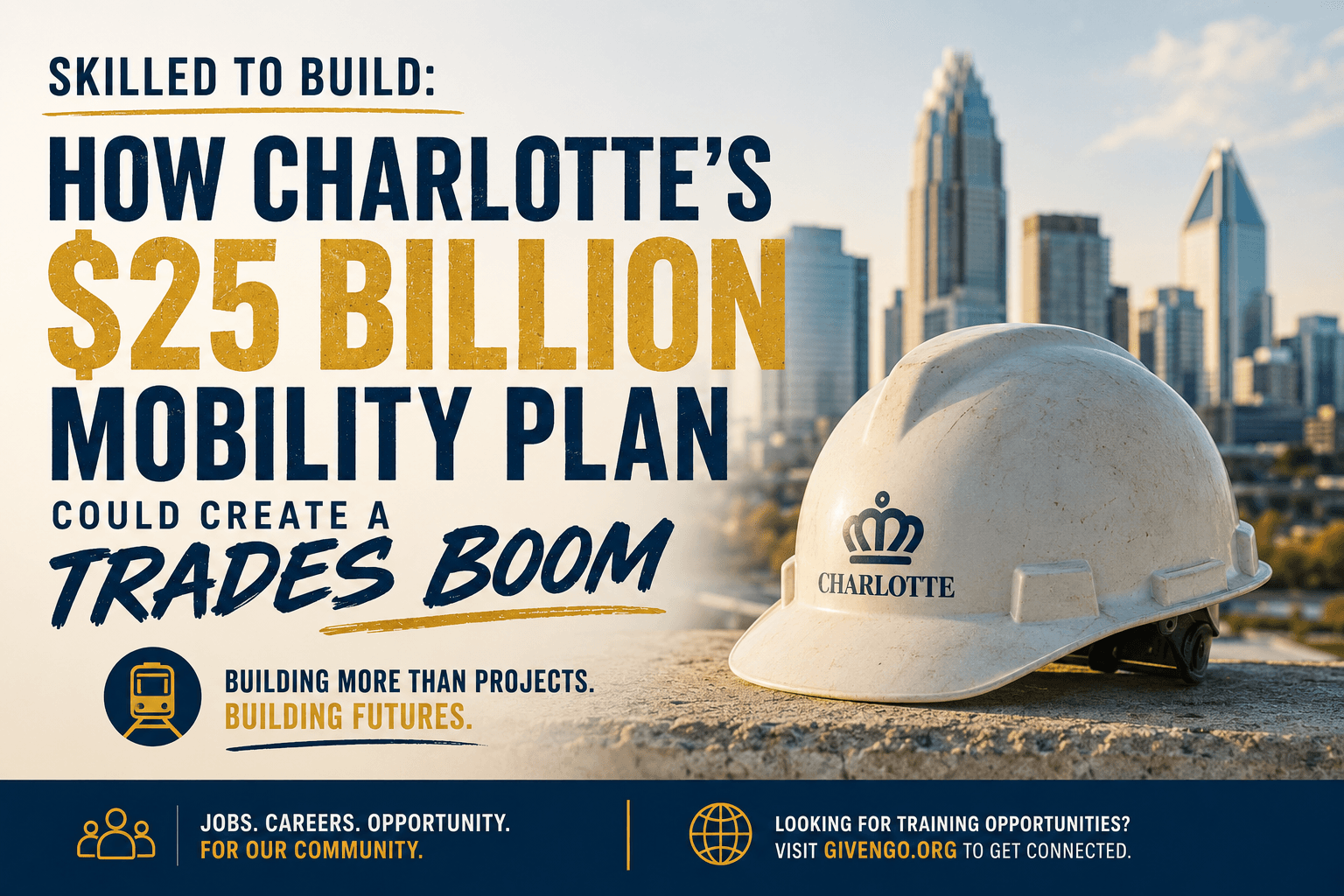
Skilled to Build: How Charlotte’s $25 Billion Mobility Plan Could Create a Trades BoomCharlotte is preparing for one of the biggest infrastructure investments in its history.
A massive transportation and mobility plan could reshape how people move across the region for decades. But the bigger story may not just be the rail lines, roads, buses or bridges.
The bigger story is this:
Who is going to build it?
That question matters because Charlotte’s growth is creating a once-in-a-generation opportunity for local workers, contractors, students and small businesses. Through the city’s Skilled to Build initiative, thousands of residents could gain access to training, better-paying careers and pathways into the skilled trades.
For Charlotte Impact Weekly, this is the kind of story that matters most. It is not just about transportation. It is about economic mobility, workforce development, local business growth and making sure the people who live here have a real shot at helping build what comes next.
What You Need to Know Investment: More than $25 billion in transportation and mobility funding Opportunity: Thousands of skilled trades and construction-related jobs Focus: Roads, rail, buses, microtransit and infrastructure projects Local Impact: Training, apprenticeships, small business support and workforce development Key Program: Skilled to Build
Why This Matters for CharlotteCharlotte has spent years talking about economic mobility, but infrastructure gives the city a chance to turn that conversation into action.
Major public projects do more than move traffic. They create careers. They open doors for small businesses. They create demand for electricians, welders, equipment operators, concrete workers, surveyors, CDL drivers, traffic control specialists and project managers.
When that work is connected to local training and local hiring, the impact can reach far beyond a construction site.
A young adult who enters a trade can build a stable career without taking on massive student loan debt. A small contractor can grow from residential work into public infrastructure. A parent looking for a career change can move into a field with long-term demand.
That is the promise behind Skilled to Build.
The $25 Billion QuestionThe transportation plan is massive, but the idea behind it is simple: Charlotte needs a stronger, more connected mobility system to keep up with growth.
The proposed investment includes funding for roads, rail, bus service, microtransit and major corridor improvements. That means more than just smoother commutes. It means years of work for the people and businesses that can help design, build, maintain and operate the system.
The plan is commonly discussed through a 40/40/20 framework:
Where the Money Goes 40% for Roads: Road improvements, bridge repairs, intersection upgrades, congestion relief and corridor projects. 40% for Rail: Major transit expansion, including future rail projects and extensions. 20% for Bus and Microtransit: Better bus service, more frequent routes and neighborhood-level transportation options.
For residents, this could mean better ways to get around the region.
For workers and businesses, it could mean something even bigger: a long-term pipeline of opportunity.
The Worker Gap Is RealHere is the challenge: Charlotte cannot build a transportation future without the people trained to do the work.
The region is already facing a skilled labor shortage. Many experienced infrastructure workers are nearing retirement, and demand for construction-related talent continues to grow. That creates pressure on projects, employers and local governments.
But it also creates opportunity.
If Charlotte can train more residents for skilled trades careers, the city can turn a workforce challenge into an economic mobility strategy.
That means helping people move into fields like:
These are not just jobs. For many people, they are pathways into stable income, benefits, business ownership and long-term career growth.
What Is Skilled to Build?Skilled to Build is the city’s workforce development response to the moment.
The initiative is designed to help prepare Charlotte residents and local businesses for the work connected to major infrastructure and mobility projects. Instead of waiting until contracts are awarded and then hoping the workforce exists, Skilled to Build focuses on building the pipeline now.
The program includes support for training, employer partnerships and small business readiness.
Skilled to Build Focus Areas Talent Training: Helping residents gain skills for construction, transportation and infrastructure careers. Employer Engagement: Supporting internships, apprenticeships and job placement pathways. Small Business Readiness: Helping local companies prepare to compete for public contracts and infrastructure work.
That last piece is especially important.
Many local contractors have the skill to do the work, but public projects often require additional paperwork, bonding capacity, certifications, compliance steps and bidding experience. Skilled to Build can help close that gap so more local businesses are ready when opportunities open.
What This Means for Local ContractorsIf you own a small construction, trades or home-service business in Charlotte, this moment is worth paying attention to.
You may not be bidding on a billion-dollar rail project by yourself, but that does not mean there is no opportunity. Large public projects often create demand for subcontractors, suppliers, certified firms and specialized service providers.
That could include businesses working in:
The key is preparation.
Local businesses should start thinking about certifications, vendor registration, insurance, bonding, safety training and partnerships with larger prime contractors.
Own a Local Contracting Business? This could become one of the biggest business development opportunities Charlotte has seen in decades. Start preparing now by reviewing your certifications, registering as a city vendor, exploring Charlotte Business INClusion opportunities and building relationships with prime contractors before major projects begin.
What This Means for Workers and StudentsFor workers, students and career changers, the skilled trades deserve a fresh look.
Not every strong career requires a four-year degree. Many transportation and infrastructure jobs offer a path to solid income, career advancement and pride in building something visible in the community.
These careers can be especially powerful for people who want to learn by doing, avoid heavy student debt or move quickly into a field with real demand.
For a student, that could mean entering a career field earlier.
For a parent, that could mean helping a son or daughter find a practical path.
For someone stuck in low-wage work, that could mean a bridge into a higher-income future.
Looking for Training? GivenGo Can Help You Get Connected If you or someone you know is interested in skilled trades training, construction careers or workforce development opportunities, GivenGo is being built to help connect people with the right programs, resources and pathways. Visit givengo.org to learn more and get connected to training opportunities that can help you take the next step.
Why Training Access MattersTraining is often the missing link between opportunity and income.
A person may be willing to work, but not know where to start. A business may need workers, but not have a simple way to connect with people who are ready to learn. A training provider may have programs available, but struggle to reach the people who need them most.
That is where connectors matter.
Charlotte needs more bridges between residents, employers, training programs and local opportunities. If the city is going to build roads, rail lines and stronger communities, people need clear pathways into the work.
For many residents, the first step is not a job application.
The first step is knowing what training exists, what support is available and who can help them move forward.
Small Businesses Need a Seat at the TableOne of the biggest risks with major infrastructure spending is that local businesses get left behind.
Large projects can easily flow to large firms that already know how to navigate government procurement, bonding requirements and compliance rules. That is why small business readiness matters so much.
If Charlotte wants this investment to create real local impact, small businesses need help preparing before the contracts arrive.
That includes:
When local businesses are ready, public investment can circulate deeper into the Charlotte economy.
The Impact Could Last for Decades
Transportation projects are long-term by nature. The planning, design, construction and maintenance can stretch across years.
That means the workforce opportunity is not limited to one hiring season.
If done well, this mobility investment could create a durable pipeline of careers and business opportunities across Charlotte. It could help young people see the trades differently. It could help local contractors grow. It could help families access more stable income.
And it could give residents a deeper connection to the city around them.
There is something powerful about driving past a road, bridge, rail station or public project and being able to say, “I helped build that.”
How to Plug InIf you are interested in this opportunity, do not wait until every project is already underway.
Start preparing now.
For Families, Students and Career Changers If college does not feel like the right path, the skilled trades may offer another route into stability and purpose. Charlotte’s next chapter will need builders, operators, technicians, drivers, electricians and problem-solvers. The opportunity is not just to find a job. The opportunity is to help build the future of the city.
The Bottom LineCharlotte’s $25 billion mobility plan is about more than transportation.
It is about whether local people will benefit from the growth happening around them.
It is about whether students can find new career pathways, whether small businesses can compete for major opportunities and whether public investment can create lasting economic mobility.
The city is going to build.
The question is whether Charlotte residents will be skilled, connected and ready to build with it.
If you are looking for training, workforce development support or a pathway into skilled trades opportunities, visit givengo.org to learn more.
Charlotte’s future is under construction. Now is the time to make sure local workers and local businesses are part of the blueprint. |


0 Comments
Join the conversation
Be the first to comment
Share your thoughts above.