
Charlotte's Season of Giving: A Recap of 2025 Impact Stories in Our Community |
Discover the heartwarming stories that made Charlotte shine in 2025 - a season of generosity and impact in our community. |
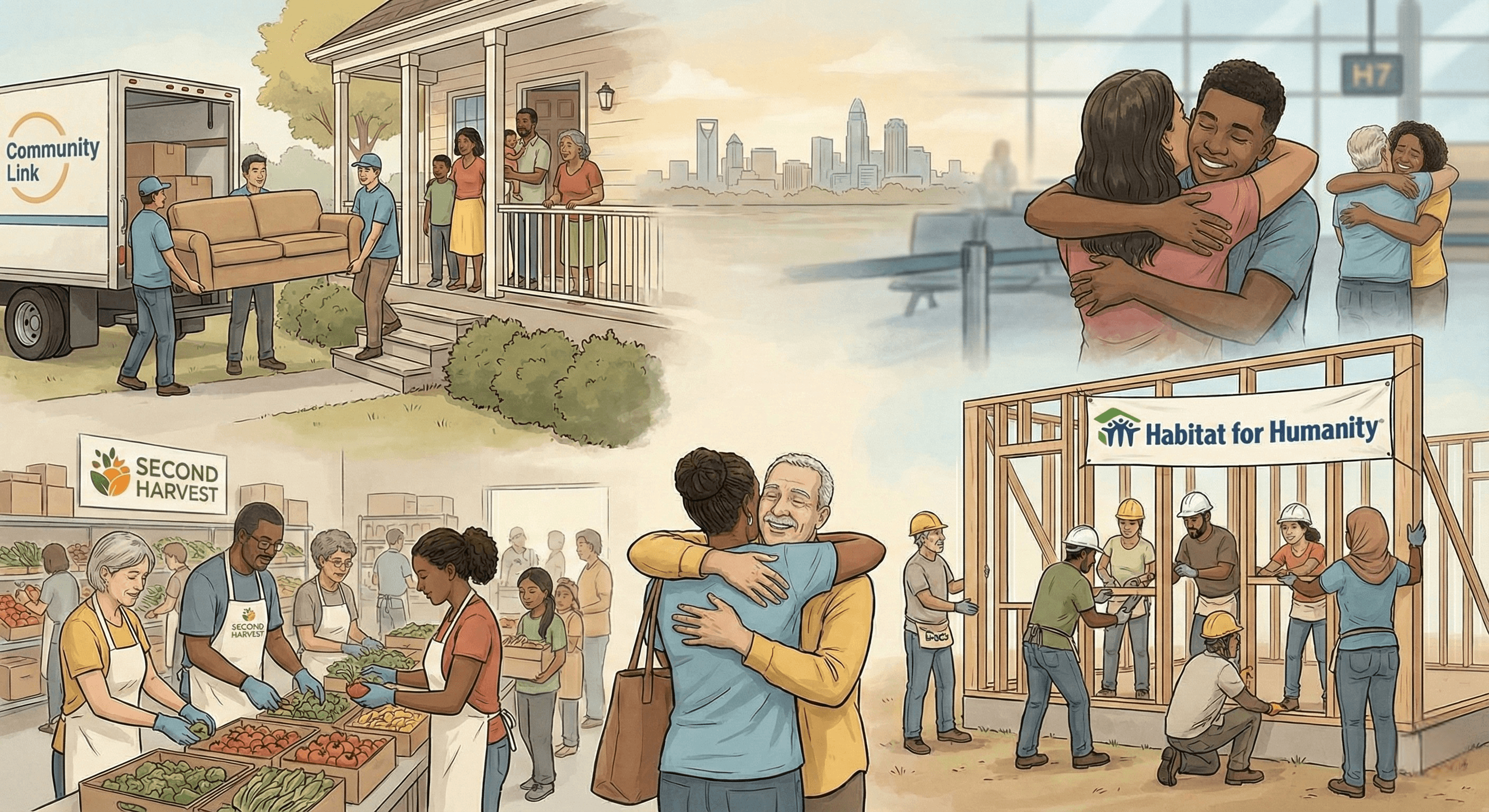
If 2025 had a theme in Charlotte, it was this: neighbors stepped up. Not just with big gala checks and corporate campaigns, but with rides to the airport, furniture deliveries to families starting over, food distributed quietly behind warehouse doors, and volunteers showing up early to help count and care for people living outside.
This year-in-review isn't a ranking of "best" charities. It's a highlight reel of real moments where local nonprofits and donors moved the needle and, in many cases, changed the next chapter of someone's life. And heading into 2026, the takeaway is simple: the need isn't slowing down, but neither is Charlotte's generosity. The year Charlotte turned giving into "infrastructure"Some of the most important impact in 2025 didn't show up as a single viral story. It looked like systems being strengthened: capacity expanded, programs funded, and organizations resourced to do the work every day, not just during the holidays.
A local engine for grantmaking kept communities fundedFoundation For The Carolinas (FFTC) continues to operate as one of the region's biggest "connective tissues," managing competitive grant programs that channel philanthropy into priorities across the region.
One example: FFTC's published 2025 grant awards include funding to a wide range of nonprofits supporting everything from youth, education, and advocacy to direct-service organizations meeting basic needs. It's a reminder that "community impact" often starts with something simple: operating support and program dollars arriving on time.
A newer philanthropic player doubled down on targeted needsThe Charlotte Community Foundation highlighted how donor-designated funds shaped Fall 2025 grants, specifically supporting focus areas like veterans, seniors, and youth, plus program grants addressing housing insecurity and health care, backed by estate gifts. That matters heading into 2026 because it shows how "planned giving" and endowments become long-run stability for frontline work.
Nonprofit capacity got a boost, not just charityCharlotte also saw continued attention on helping nonprofits get stronger, not only funded. Social Venture Partners (SVP) Charlotte marked major milestones in its broader work and its long-running programs supporting grassroots organizations and leaders. And the SEED20 Impact Report reflects how Charlotte keeps investing in nonprofit leadership and growth, not only one-time campaigns.
Why this matters for 2026: The city is building "impact infrastructure." That's the behind-the-scenes leadership development, grantmaking, and capacity-building that makes every donated dollar stretch further. A flight home that became a Christmas miracleSome stories are so specific they become universal.
On Christmas Eve, a Charlotte-area soldier's holiday wish was granted. U.S. Army Private Second Class Joshua Tillman hadn't seen his mom since July. He was able to fly home from his base in Arizona and reunite with her at Charlotte Douglas International Airport. The trip was made possible by Miles for Military, a nonprofit dedicated to reuniting service members with their families.
It's the kind of moment that cuts through the noise because it's not abstract "support." It's a seat on a plane. It's a mother waiting at the airport. It's a hug that happens because donors chose to make it happen.
The "Season of Giving" isn't only about December. It's about removing the one barrier that keeps a family apart (cost) and letting love do the rest. Food and basic needs: the quiet scale of helpThe biggest impact stories are often the least visible because they happen out of sight: warehouses, distribution sites, partner pantries, and case management offices.
Feeding the region at enormous scaleSecond Harvest Food Bank of Metrolina reported that in fiscal year 2024–2025 it distributed over 88 million pounds of food and household items across its 24-county service region, including large quantities of higher-nutrition foods like produce, meat, and dairy.
That kind of throughput isn't just a statistic. It's families making it through another week, seniors receiving consistent boxes, and community organizations having something to hand people when the pantry shelves would otherwise be empty.
Meeting the money crisis where it hits: rent and utilitiesCharlotte's affordability challenges continued to drive demand for emergency assistance. Crisis Assistance Ministry remained a frontline resource, providing rent and utility help to Mecklenburg County residents. The organization also pointed to data and reports showing deepening housing instability in Mecklenburg County. That context helps explain why emergency aid remains so critical going into 2026. Dignity and stability: investing in "a fresh start"Beds, furniture, and a home that finally feels like homeBeds for Kids isn't only delivering mattresses. They're helping families rebuild stability with essential furniture. Their site highlights long-term impact totals including 25,000+ beds delivered and 8,000 families served since 2011. That's proof of a mission built brick-by-brick through volunteer labor and community donations.
Here's the thing about 2025: when a family moves into housing but has no bed, no table, no dresser, the "housing win" still feels unfinished. Furniture banks complete the story.
Economic independence, expandedIn late 2025, Dress for Success Charlotte announced a move to a larger facility (over 12,000 square feet) to meet rising demand for career coaching, job-readiness support, and professional attire. It's another example of capacity growing because the need is real and sustained.
Why this matters for 2026: More Charlotte residents are trying to stabilize their lives amid higher costs. Nonprofits scaling services now is a signal that 2026 giving can be more strategic: fund growth, not just emergencies. Housing and homelessness: collaboration that turns into real unitsA year-in-review on giving in Charlotte has to acknowledge a tough truth: homelessness and housing instability remained urgent in 2025, and the solutions require coordinated effort.
One of the most concrete examples: Easter's Home, a 21-unit affordable housing project in Elizabeth developed through collaboration with Roof Above and partners. The project serves residents earning 30% to 50% of area median income and was expected to open in summer 2025.
Separate reporting also highlighted initiatives like Forest Point Place, a renovated hotel providing housing for older adults experiencing homelessness, with Roof Above involved in case management and support services.
And heading into 2026, Mecklenburg County continued mobilizing volunteers around the annual Point-in-Time Count. It's an example of the community literally showing up to ensure people living outside are counted and connected to resources. What 2025 taught us about giving in 20261) Capacity is the new charity.
2) Unrestricted dollars matter more than most donors realize.
3) Micro-acts create macro-moments.
|
0 Comments
Join the conversation
Be the first to comment
Share your thoughts above.