Charlotte keeps growing. New apartments, cranes, and development projects seem to appear everywhere you look. But while luxury housing continues to expand, affordable housing remains one of the city’s biggest challenges.
Now, a growing movement known as “Yes in God’s Backyard” (YIGBY) is creating a new conversation around how Charlotte can address the housing crisis in a more community-driven way.
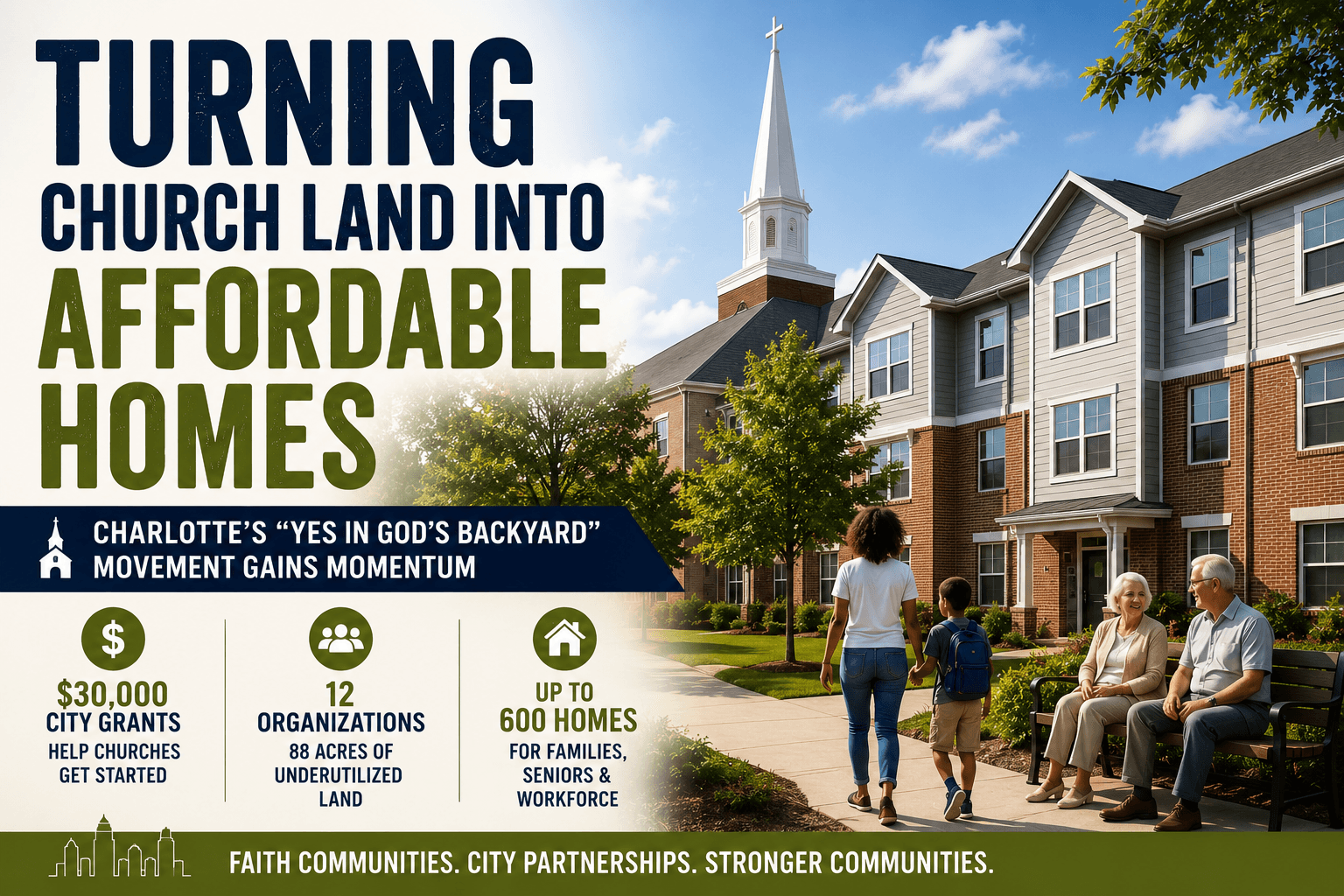
![[HERO] Turning Steepled Land into Affordable Homes](https://cdn.marblism.com/yeojOpck16U.webp)
Instead of letting church parking lots and unused land sit idle, local congregations are beginning to explore how those properties can be transformed into affordable housing for families, seniors, and workforce residents.
Charlotte’s $30,000 Grants Are Helping Churches Get Started
One of the biggest barriers to affordable housing development is not always construction itself. It is often the early planning process.
Before a project can even break ground, organizations face expensive pre-development costs such as:
• Architectural planning
• Rezoning applications
• Environmental testing
• Site surveys
• Legal and permitting expenses
To help remove those barriers, the City of Charlotte is offering $30,000 grants specifically designed to help faith-based organizations move projects from concept to reality. You can view the official city page here: Faith in Housing Technical Assistance Grants.
The goal is simple: help churches determine whether their land can realistically support affordable housing development before they take on larger financial risks.

Grove Presbyterian Is Leading By Example
One of the most talked-about projects in Charlotte right now involves Grove Presbyterian, which is working to build 24 affordable housing units directly on church-owned land.
Rather than viewing unused land as surplus property, the church is treating it as an opportunity to directly support the surrounding community.
The project reflects a broader shift happening across Charlotte, where faith organizations are beginning to see housing as part of their long-term mission and impact.
For many residents struggling with rising rents and housing costs, developments like this could become an important piece of Charlotte’s future housing strategy.
The “Faith in Housing Charlotte” Initiative Could Unlock 88 Acres of Land
Grove Presbyterian is part of a larger coalition called Faith in Housing Charlotte. The group currently includes 12 organizations working together to explore affordable housing opportunities across more than 88 acres of underutilized land throughout the city. You can learn more on the city’s official Faith in Housing page.
Most of these properties are currently used as:
• Overflow parking lots
• Vacant green space
• Unused church-owned land
Repurposing even a portion of that land could create a meaningful increase in affordable housing inventory across Charlotte.
The organizations within the cohort also share resources, collaborate on planning, and learn from each other as they navigate the complicated world of housing development.

Why Church-Owned Land Makes Sense for Affordable Housing
There are several reasons why church-owned land is uniquely positioned to support affordable housing initiatives in Charlotte.
1. Many Churches Already Sit Inside Established Neighborhoods
Churches are often located near:
• Public transportation
• Schools
• Grocery stores
• Employment centers
That makes them ideal locations for workforce and senior housing.
2. Community Trust Already Exists
Unlike large corporate developments, church-led projects often begin with built-in relationships and trust inside the surrounding community.
3. The Land Is Often Already Paid For
Land acquisition costs are one of the biggest drivers of rising housing prices. Since many churches already own their land outright, development costs can potentially stay lower than traditional market-rate projects.
Enterprise Community Partners Is Helping Churches Navigate Development
Most churches are not real estate developers. That is where organizations like Enterprise Community Partners come in. You can learn more about the organization here: Enterprise Community Partners.
The organization helps guide churches through:
• Development planning
• Affordable housing financing
• Developer partnerships
• Long-term affordability strategies
• Project feasibility analysis
That technical expertise is helping transform good intentions into projects that can realistically succeed over the long term.
The Bigger Goal: Up to 600 Affordable Homes
The broader vision behind the Faith in Housing initiative is ambitious. Organizers believe the program could eventually support the creation of up to 600 affordable housing units across Charlotte.
Those units could include:
• Workforce housing for teachers, nurses, and service workers
• Senior housing for aging residents
• Family rental housing for working households
As Charlotte continues debating growth, zoning, and development priorities, this initiative represents a different approach — one focused on using existing community assets to address housing needs directly.

Charlotte’s Housing Conversation Is Changing
For years, housing conversations often centered around resistance to new development. But the YIGBY movement reflects a growing shift toward asking a different question:
How can underutilized community land help solve local problems?
That mindset is beginning to reshape how churches, nonprofits, city leaders, and residents think about affordable housing in Charlotte.
And as more congregations begin exploring similar projects, Charlotte could become a national example of how faith-based organizations can help address housing shortages in rapidly growing cities.
The Bottom Line
Charlotte’s affordable housing challenge is not going away anytime soon. But the city’s partnership with faith communities is creating a new path forward.
By combining:
• Church-owned land
• City funding support
• Affordable housing expertise
...the Faith in Housing initiative is working to turn underused property into long-term housing opportunities for Charlotte residents.
What once sat as empty parking lots and unused green space could soon become homes for hundreds of families across the Queen City. 🏡 |

0 Comments
Join the conversation
Be the first to comment
Share your thoughts above.